
Commercial Fire Pump Testing in Columbus, Ohio
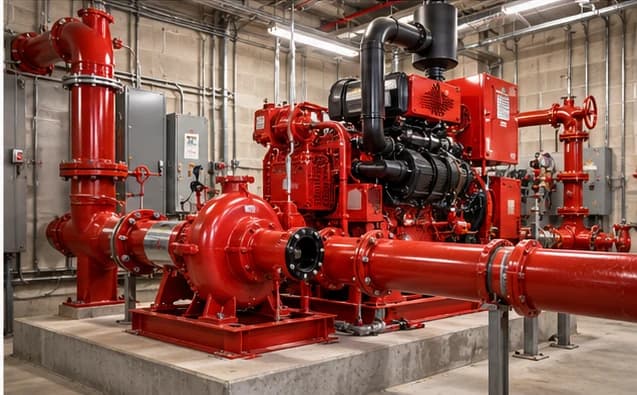
A fire pump raises water pressure for a sprinkler system, a standpipe, or both, when the available supply cannot, by itself, provide the pressure the system was designed to use. That supply may be the city main, a tank, or another stored source.
Service requests will be referred to an independent fire sprinkler contractor holding the required state certifications and applicable local registrations for the work requested.
Why the pump is its own inspection
Many commercial buildings have no fire pump. Their water supply was judged adequate without one. Pumps show up where that supply was not enough for the demand: a tall building, a large warehouse, a remote site, or a system that needs more pressure than the supply provides.
Where a pump is part of the supply, NFPA 25 treats the pump as its own inspection and testing program. A walk of the sprinkler heads and valves does not substitute for it. A sprinkler file that never mentions the pump leaves the water supply unverified. That is also why a pump changes the scope, and the cost, of a visit. Those factors are on the inspection cost factors page. Where pump work sits on the larger calendar is on the inspection and testing schedule page.
A jockey pump is the smaller pump that keeps ordinary pressure loss from starting the fire pump. If a report names one, mention it. The rest of the sprinkler visit, apart from the pump, is on the inspection and testing page.
How to tell whether this building has one
The answer is in the file and on the door of the room. Leave the equipment alone.
- Previous inspection reports. A pump section, a pump test result, or a note that no pump is present settles it.
- Drawings. A pump room, a pump curve, or a controller on the riser diagram means the building has one.
- A room labeled as a fire pump room, often near the riser, with a controller visible from the doorway.
- The contractor who has been testing the building. The pump is either in that scope or it is not.
When the pump becomes the issue
A routine inspection
The sprinkler visit is being scheduled, and someone needs to know whether pump testing belongs in the same scope.
A report that names the pump
A deficiency, a failed test, or a controller alarm is written against the pump. That item is part of the corrective work, not a side note on the sprinkler form.
Buying or taking over a building
The last pump test, or the absence of one, belongs in the sprinkler file a buyer asks for. The records list is on fire sprinkler records when buying a commercial building.
Installation or retrofit
A new system or a change in demand may need a pump because the supply cannot meet the design. That is a design question for the installation or retrofit, decided from the water supply and the drawings.
What to have ready
- The last pump test report, if the file has one
- Recent sprinkler inspection records
- Deficiencies written against the pump or the controller
- Pump information already printed on those documents
- Who can provide access to the pump room
If there is no pump report in the file, say that. A missing report means the test history is not in hand.
Request fire sprinkler help
Call with the address. Mention the pump if a report or a pump room says the building has one.
Service requests will be referred to an independent fire sprinkler contractor holding the required state certifications and applicable local registrations for the work requested.